Enterprise AI Inventory: What It Is, Why It Matters, and How Holistic AI Can Help

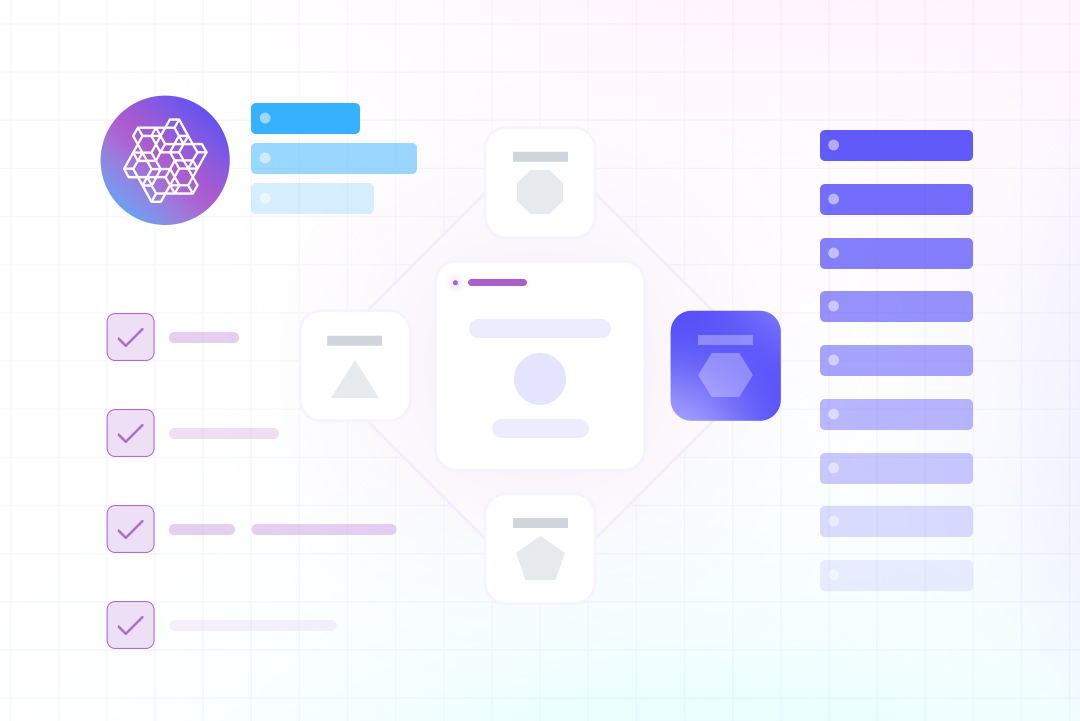
Most enterprises have no idea how many AI systems they actually run. Here is how the Holistic AI Governance Platform solves that.
There is a question that stops most Chief AI Officers the first time a regulator asks it: can you show me a complete list of every AI system your organization currently operates?
Not the ones the data science team built. Not just the ones the CTO knows about. Every AI system. The one embedded in HR software that screens resumes. The one a product manager connected to a third- party API six months ago. The fraud detection model someone in finance trained on a spreadsheet. The customer service chatbot that marketing spun up on a free trial and forgot to turn off.
Most enterprises cannot answer that question. Not because they lack the data, but because the data has never been assembled in one place, organized with any structure, or maintained with any consistency.
This is the problem Holistic’s AI inventory exists to solve. And with the EU AI Act enforcement underway, NIST AI RMF adoption accelerating, and ISO 42001 certifications becoming a procurement requirement, the organizations that cannot answer that question are the ones that could pay the price.
What Is an AI Inventory?
An AI inventory is an active, structured, continuously maintained record of every AI system an organization operates. The word "active" is doing a lot of work in that sentence.
Most enterprises today track AI systems using spreadsheets, Jira tickets, or informal knowledge spread across teams. Every one of these approaches is passive. They depend on someone remembering to register a system, update a record, or maintain accuracy over time. In a world where AI is being built and deployed faster than governance teams can track it, passive documentation fails by design.
A real AI inventory does not wait for humans to self report. It goes looking for AI systems, pulls structured information from every connected source, and keeps that information current automatically.
Registry vs. Inventory: A registry is what people remember to document. An inventory is what actually exists. That distinction is the difference between governance as a reporting exercise and governance as an operational system.
Why Does AI Inventory Matter?
Without a complete inventory, every other part of an AI governance program is guessing. You cannot assess risk on systems you do not know exist. You cannot demonstrate compliance for systems that are not documented. You cannot govern at scale without knowing what you have.
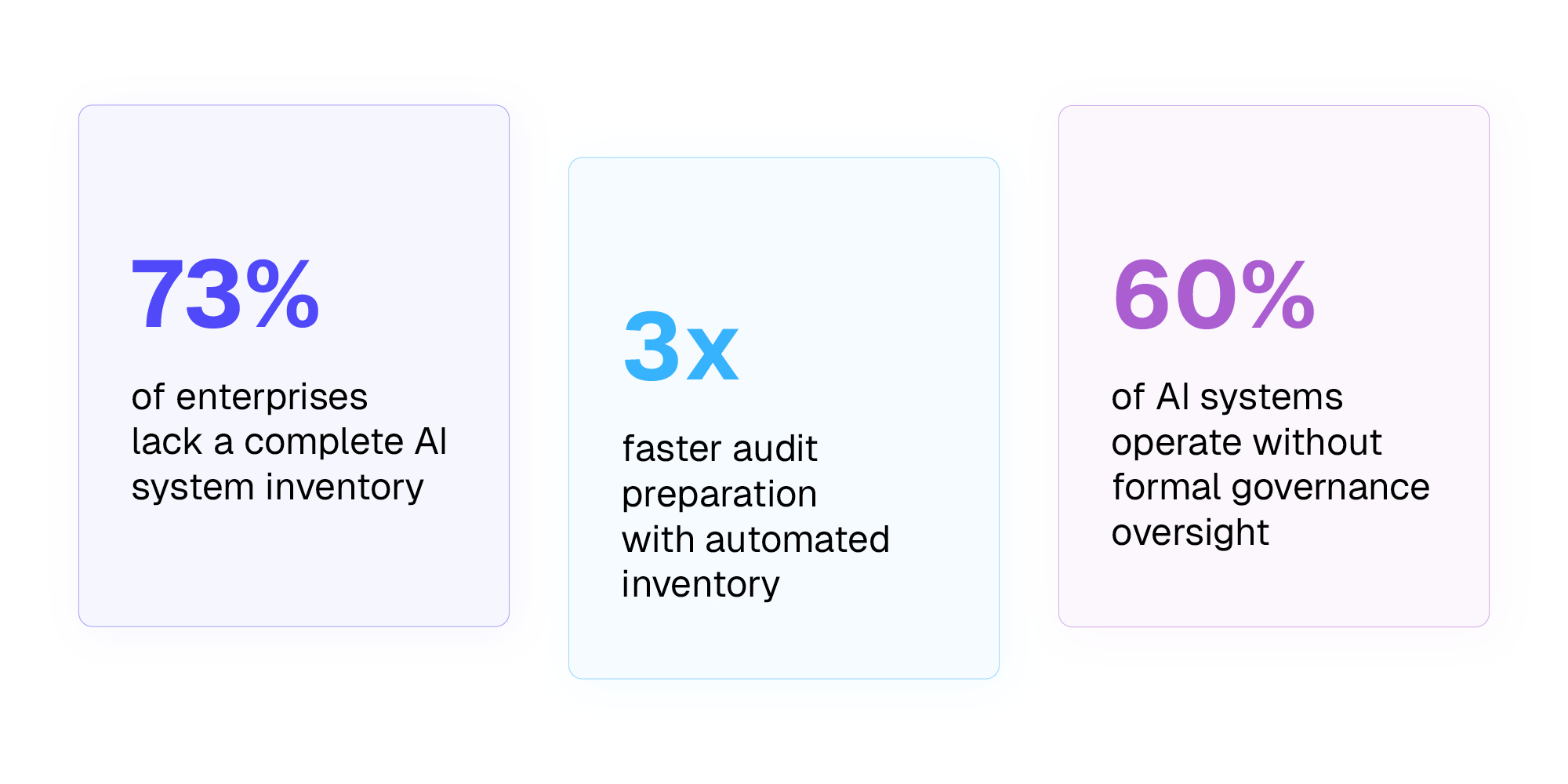
The EU AI Act requires organizations to register high risk AI systems and maintain documentation of their technical characteristics, risk assessments, and mitigation measures. NIST AI RMF explicitly requires an inventory of AI systems and their contexts of use. ISO 42001 certification auditors will ask to see the inventory, and they will probe whether it accurately reflects the actual AI estate.
None of this is achievable without knowing which systems exist and which meet the definition of high risk.
The Problem Inside Enterprises
The way most enterprises track AI today is broken in predictable ways.
Manual documentation means governance teams only know about the systems someone thought to register. A model gets pushed to production. An API gets wired into a product flow. A notebook becomes a scheduled job. Unless someone chooses to document it, it does not exist from a governance perspective.
The result is delayed launches, duplicated effort, compliance gaps, and risk exposure that nobody can quantify because nobody can see the full picture. One enterprise we worked with discovered that their manual tracking process was capturing less than half of the AI systems actually running in production. The other half was invisible to governance.
The most dangerous AI system is the one you did not know existed.
The Holistic AI Approach to AI Inventory
The Holistic AI Governance Platform takes a fundamentally different approach. Instead of asking teams to fill out forms, the platform connects directly to your infrastructure and finds AI systems automatically.
The platform follows an Identify, Protect, and Enforce approach to AI governance. Here is what that looks like in practice.
Identify: Discover Everything That Exists
The platform connects to your existing infrastructure through read only integrations with 15+ enterprise systems, from code repositories and cloud ML platforms to document management systems and observability tools. No code changes or agent installation required.
Once connected, the platform begins scanning continuously. It does not wait for someone to register a system. It goes looking. An intelligent classification engine separates what is genuinely AI related from everything else, so governance teams see only what matters without drowning in noise.
This is also where Shadow AI gets surfaced. AI systems that were never formally registered, models that were deployed without approval, API integrations nobody documented, experiments that quietly became permanent. The platform finds them automatically and flags them for governance review. You cannot govern what you cannot see, and most organizations are surprised by what the first scan reveals.
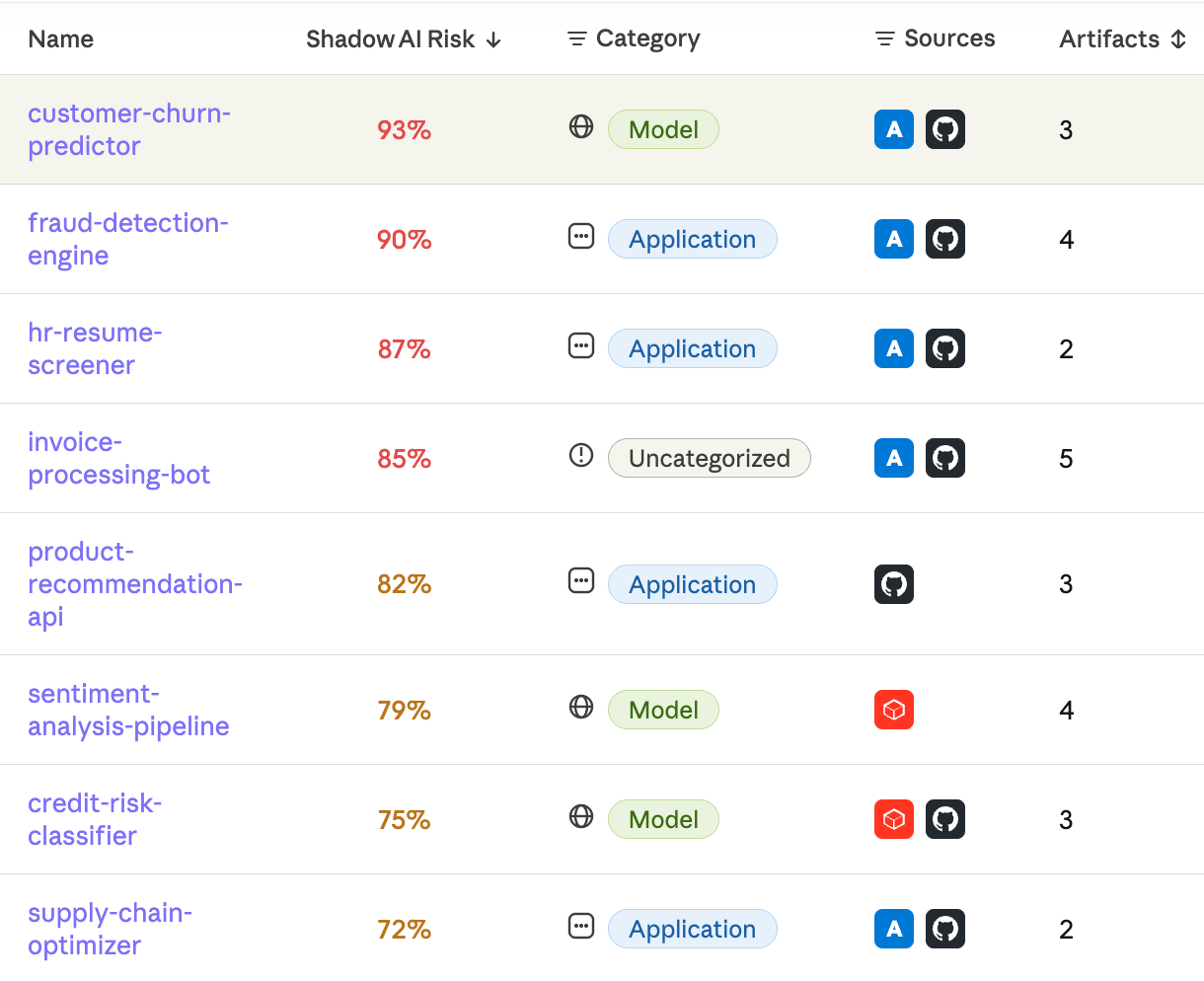
Discovered artifacts are then automatically clustered into structured asset records. The platform analyzes relationships across systems to connect the dots: which code produced which model, which infrastructure serves it, which documentation describes it. The result is a single, complete record for every AI system, assembled automatically from the actual evidence rather than from someone's memory.
AI Discovery: The platform's discovery engine is purpose built to find AI systems across complex enterprise environments. It supports the breadth of infrastructure that enterprises actually use, not just the obvious places where AI lives. Learn more about AI Discovery.
Protect: Assess Risk Across Your Entire Estate
Once your inventory is built, every asset can be assessed for risk, safety, and compliance. The platform supports structured assessments for bias, robustness, efficacy, transparency, privacy, and exposure, along with advanced testing capabilities for LLM and agentic AI systems.
Risk classification happens at the asset level. Each system gets a risk profile based on its actual characteristics, not a self assessment questionnaire. The EU AI Act risk classification uses automated analysis to determine which systems are high risk based on how they are actually being used, surfaced through a dashboard that gives compliance teams immediate visibility across the entire portfolio.
A built in regulatory intelligence layer provides continuously updated coverage of legislation, regulations, penalties, and incidents across jurisdictions. Instead of manually tracking regulatory changes, the platform connects the dots between what regulators require and what your inventory contains.
Enforce: Govern Consistently at Scale
The inventory is not a static list. It is the operational foundation that powers your governance program. The platform lets you define what information every asset must carry, trigger approval workflows automatically when certain conditions are met, and track everything with full audit trails and sign off tracking.
When a new asset appears in the inventory, the governance process starts automatically. Assessments get triggered. Workflows get created. Owners get assigned. All supporting evidence, from policy documents to assessment reports to compliance certifications, is stored in a secure, versioned repository linked directly to the assets they support.
When an auditor asks for evidence, it is already organized and traceable. When a regulation changes, you can immediately see which assets are affected. When a new system is deployed, governance begins before a human ever has to notice it.
A Single Source of Truth: The platform gives you a real time view of your entire AI estate in one place: total assets, growth trends, risk profiles, compliance status, and activity analytics. No spreadsheets. No email chains. No guessing. See how it works.
What Changes When You Have a Real Inventory
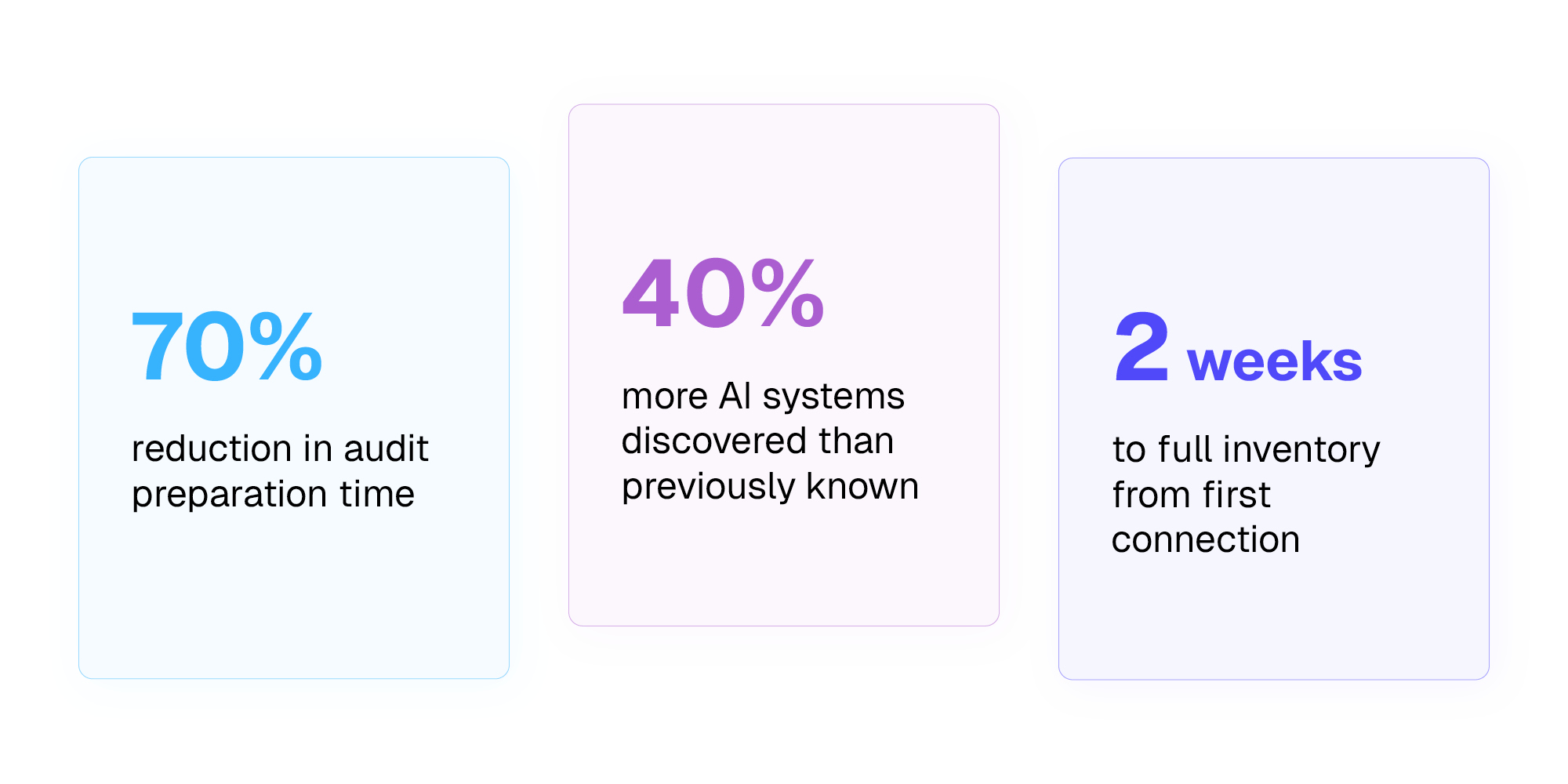
The shift is measurable. One global enterprise used the platform to consolidate their AI governance across multiple business units. Before Holistic AI, their compliance team spent weeks preparing for each audit, manually assembling documentation from scattered sources. After deploying the platform, audit preparation dropped by over 70%. Every asset, every assessment, every piece of evidence was already organized and traceable.
Another organization discovered 40% more AI systems than they knew existed within the first two weeks of connecting their sources. Models running in production without any governance oversight, API integrations nobody had documented, experiments that had become permanent fixtures. All of it surfaced automatically and brought into the governance program.
The organizations that handle regulatory scrutiny with confidence are not the ones using spreadsheets and self reporting. They are the ones with systems that actively look for AI and find it, whether anyone documented it or not.
Know What You Have. Govern What Matters
Most organizations already have something they call an AI inventory. The real question is whether it reflects what actually exists across your infrastructure, or just what someone remembered to write down.
The Holistic AI Governance Platform closes that gap. Connect your sources, let Tracer scan your infrastructure, and within weeks you have a complete, continuously maintained inventory in Store with every asset documented, classified, and ready for governance. No spreadsheets. No self reporting. No blind spots.
The question is not whether you need an AI inventory. The question is whether the one you have right now could survive a regulatory audit tomorrow.